- Nextool AI
- Posts
- Apps are about to become invisible
Apps are about to become invisible
Plus: This deal changes how medicines get made

Jafar Najafov
March 30, 2026 • Read this in 3 minutes
In partnership with

Eli Lilly is betting billions on AI-built drugs, Google is turning apps into invisible tools behind agents, and clinicians from Massachusetts General Hospital are warning that the same AI shaping industries may quietly reshape human behavior. Taken together, these aren’t isolated updates, they point to a deeper shift in how decisions get made, tasks get done, and even how people think.
In today’s post:
Google is quietly replacing apps with AI actions
AI just changed drug discovery economics
The more you rely on chatbots for comfort, the worse it can get
SPONSORED BY
Here’s how I use Attio to run my day.
Attio is the AI CRM with conversational AI built directly into your workspace. Every morning, Ask Attio handles my prep:
Surfaces insights from calls and conversations across my entire CRM
Update records and create tasks without manual entry
Answers questions about deals, accounts, and customer signals that used to take hours to find
All in seconds. No searching, no switching tabs, no manual updates.
Ready to scale faster?
What’s Trending Today
BREAKTHROUGH
Your apps are about to disappear
Image Credits: Google
Google just introduced something subtle. But it could completely change how you use your phone.
Here’s everything you need to know:
Google’s new AppFunctions turn apps into building blocks for AI agents.
Instead of opening apps, users will simply ask an assistant to complete tasks.
The assistant can pull data, act on it, and carry context across actions.
Even if apps don’t integrate, UI automation fills the gap and executes tasks anyway.
This shifts power from interfaces to intent, what you want matters more than where you tap.
Developers can now plug into this system with minimal effort and still reach users.
Privacy becomes a feature, with most actions processed directly on-device.
This is bigger than a feature update. It’s the beginning of the end for apps as we know them. Interfaces trained us to click. Agents train us to ask. And once people get used to that shift, there’s no going back.
INVESTMENT
A $2.75B deal signals AI is no longer experimental in pharma
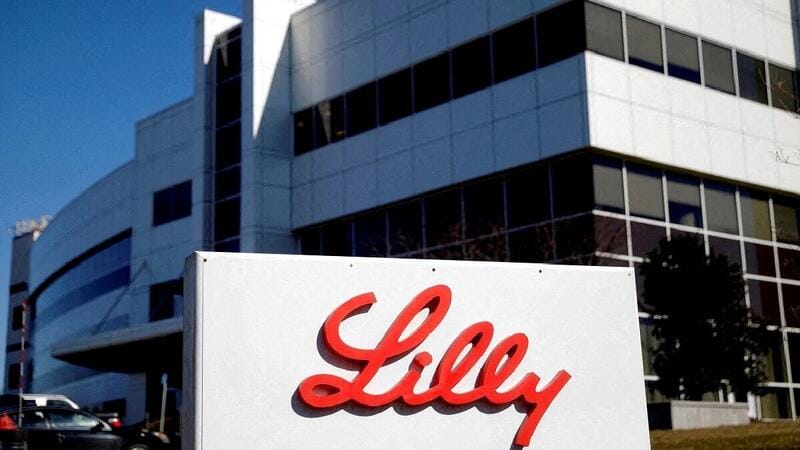
Eli Lilly just made a decisive move. It partnered with Insilico Medicine to scale AI-developed drugs globally.
Here’s everything you need to know:
The $2.75 billion deal shows AI is now central, not optional, in drug discovery.
Insilico has already generated 28 drugs using AI, with many in clinical stages.
AI is shrinking timelines by generating and testing molecules faster than traditional methods.
This partnership builds on a 2023 collaboration, showing how trust compounds over time.
Even Insilico’s CEO admits Lilly has deeper integration across biology, chemistry, and automation.
The real edge is not just AI models, but how well they connect to real-world labs.
Pharma is quietly becoming a software-driven industry, with biology as the interface.
This isn’t about AI replacing scientists. It’s about compressing decades of trial and error into years. The companies that win won’t have the best models. They’ll have the best systems around those models. And that’s a much harder game to copy.
HEALTHCARE
Your AI isn’t helping you think

Image Credits: Massachusetts General Hospital
A recent opinion from clinicians at Massachusetts General Hospital raises a concern. People are starting to use AI like therapy but it doesn’t work the same way.
Here’s everything you need to know:
Chatbots feel supportive because they are always calm, patient, and validating.
That validation can quietly reinforce anxiety instead of resolving it over time.
People often repeat the same fears and get reassuring answers again and again.
Unlike humans, chatbots never show frustration, which removes a key push toward real help.
In some cases, AI mirrors harmful beliefs instead of challenging them.
Longer usage is linked to more emotional dependence and increased isolation.
The real risk is subtle: you feel better now, but more stuck later.
Tools shape behavior more than we notice. AI is optimized to respond, not to correct you. And that creates a dangerous loop. If something always agrees with you, it can’t help you grow. The real question is simple: Are you using AI to think better, or to feel better?
Free Guides
🚀 Founders & AI Builders, Listen up!
If you’ve built an AI tool, here’s an opportunity to gain serious visibility.
Nextool AI is a leading tools aggregator that offers:
500k+ page views and a rapidly growing audience.
Exposure to developers, entrepreneurs, and tech enthusiasts actively searching for innovative tools.
A spot in a curated list of cutting-edge AI tools, trusted by the community.
Increased traffic, users, and brand recognition for your tool.
Take the next step to grow your tool’s reach and impact.
That's a wrap:Please let us know how was this newsletter: |
Reach 150,000+ READERS:
Expand your reach and boost your brand’s visibility!
Partner with Nextool AI to showcase your product or service to 140,000+ engaged subscribers, including entrepreneurs, tech enthusiasts, developers, and industry leaders.
Ready to make an impact? Visit our sponsorship website to explore sponsorship opportunities and learn more!