- Nextool AI
- Posts
- The AI Helping Scientists Decode Nature’s Hidden Patterns
The AI Helping Scientists Decode Nature’s Hidden Patterns
Plus: Luma’s New AI Agents Can Create Entire Ad Campaigns

Jafar Najafov
March 07, 2026 • Read this in 4 minutes
In partnership with

Today we will see, AI is quietly expanding into two very different worlds. One model is helping scientists track wildlife across the planet. Another is building ad campaigns and creative content automatically. Together, they show how AI is moving beyond simple tools and starting to reshape both science and creative work.
In today’s post:
AI Is Now Watching Wildlife for Us
40 Million People Ask AI Medical Questions Every Day
AI is moving from tools to agents that can run entire workflows
SPONSORED BY

The best marketing ideas come from marketers who live it.
That’s what this newsletter delivers.
The Marketing Millennials is a look inside what’s working right now for other marketers. No theory. No fluff. Just real insights and ideas you can actually use—from marketers who’ve been there, done that, and are sharing the playbook.
Every newsletter is written by Daniel Murray, a marketer obsessed with what goes into great marketing. Expect fresh takes, hot topics, and the kind of stuff you’ll want to steal for your next campaign.
Because marketing shouldn’t feel like guesswork. And you shouldn’t have to dig for the good stuff.
What’s Trending Today
BREAKTHROUGH
A single AI model is helping scientists analyze millions of animal photos

Image Credits: Google
Google open-sourced an AI model called SpeciesNet last year. The goal was simple but powerful. Help scientists identify animals from millions of camera trap photos faster than humans ever could.
Here’s everything you need to know:
Motion-triggered wildlife cameras capture millions of images every year in forests, parks, and conservation areas.
Manually sorting those images used to take researchers months or even years.
SpeciesNet is trained to identify nearly 2,500 species of mammals, birds, and reptiles automatically.
The model can recognize animals from different angles, lighting conditions, or even when only part of the animal is visible.
In Tanzania’s Serengeti, researchers used SpeciesNet to analyze a backlog of 11 million wildlife photos.
What once took years of manual analysis was completed in just a few days.
In Colombia’s Amazon region, scientists are using the system to track changes in animal behavior and migration patterns.
Some animals are becoming more nocturnal, possibly adapting to human activity or environmental threats.
In North America, wildlife agencies are using the model to quickly sort camera images before experts review them.
Researchers in Australia have even retrained the model to recognize unique local species not included in the original dataset.
Most people think AI’s biggest impact will be in business or productivity. But some of the most meaningful applications are happening quietly in science. Tools like this turn millions of random photos into real ecological insight. And when researchers understand wildlife behavior faster, they can protect ecosystems sooner. Sometimes the best use of AI isn’t replacing people. It’s helping humans finally see patterns we were always too slow to notice.
STRATEGY
Doctor AI isn’t coming. It’s already here
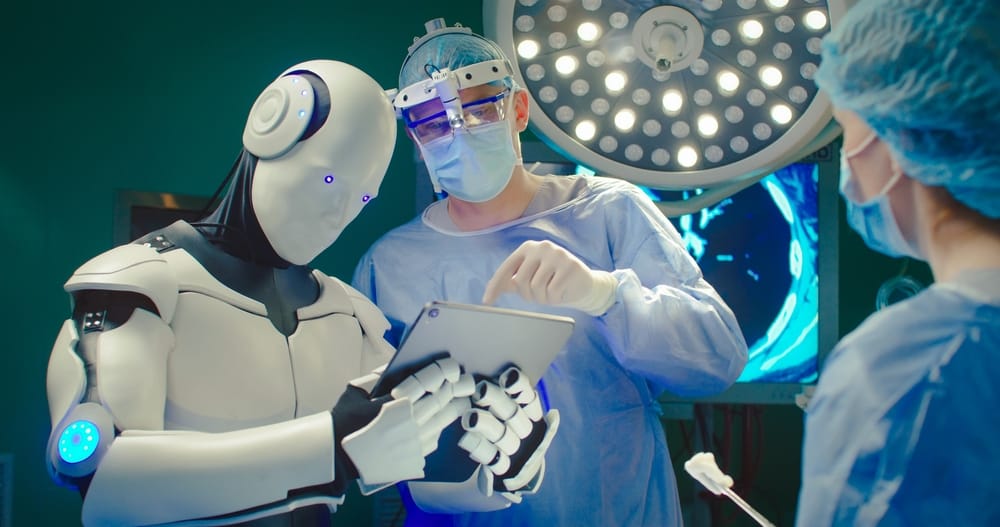
People aren’t waiting for hospitals or regulators to approve AI in healthcare. They’re already using it. Millions of people now turn to AI first when they have a health question.
Here’s everything you need to know:
More than 40 million people ask ChatGPT health-related questions every day.
Around one in four of the platform’s 800 million regular users asks medical questions every week.
This means AI is already acting as a first stop for medical information for millions of people.
Experts say the real issue is that many people treat AI like an expert instead of an assistant.
Doctors warn that AI advice can sometimes miss serious cases or give overly confident answers.
In one study, ChatGPT under-triaged about half of emergency health scenarios in testing.
However, newer AI models reportedly identify emergency situations correctly nearly 99% of the time.
Some experts believe AI can still be useful for explaining lab results or helping patients prepare questions for their doctor.
The biggest risk is that people may not know how to phrase questions properly or recognize incorrect answers.
Another concern is that AI often sounds confident even when it may be wrong.
AI in healthcare isn’t a future debate anymore. It’s already a daily behavior. People use AI the same way they once used Google for symptoms. The difference is that AI sounds far more convincing. That makes it more helpful, but also more dangerous. The real challenge won’t be stopping people from using AI for health advice. It will be teaching people how to use it without trusting it blindly..
AI AGENTS
The New AI Worker That Doesn’t Need Prompts

Image Credits: Luma AI
Luma AI just introduced something interesting called Luma Agents. Instead of helping with one task, these AI systems are designed to complete entire creative workflows from start to finish.
Here’s everything you need to know:
Luma launched AI agents powered by its new “Unified Intelligence” model family.
These agents can plan and generate text, images, video, and audio in one workflow.
The system is built on a multimodal model called Uni-1 trained on language, images, audio, video, and spatial reasoning.
Instead of using many separate AI tools, the agent coordinates across models like Luma’s Ray 3.14, Google’s Veo 3, ByteDance’s Seedream, and ElevenLabs voice models.
The agents are designed for creative industries such as advertising, marketing teams, design studios, and large enterprises.
Companies like Publicis Groupe, Serviceplan, Adidas, and Mazda are already testing the system.
One major feature is persistent context, meaning the agent remembers ideas, assets, and previous creative iterations.
The system can evaluate its own outputs, critique them, and improve results through iterative feedback loops.
In one demo, a 200-word creative brief and a product image generated multiple ad campaign concepts.
In another case, a year-long $15M ad campaign was localized into global ads in about 40 hours for under $20,000.
The biggest shift in AI isn’t better tools. It’s autonomous workflows. Most people today still use AI like a calculator. Prompt in. Result out. Agents change that model completely. Instead of asking AI to do one task, you give it an objective and let it figure out the steps. That shift could redefine how creative work actually gets done.
Free Guides
🚀 Founders & AI Builders, Listen up!
If you’ve built an AI tool, here’s an opportunity to gain serious visibility.
Nextool AI is a leading tools aggregator that offers:
500k+ page views and a rapidly growing audience.
Exposure to developers, entrepreneurs, and tech enthusiasts actively searching for innovative tools.
A spot in a curated list of cutting-edge AI tools, trusted by the community.
Increased traffic, users, and brand recognition for your tool.
Take the next step to grow your tool’s reach and impact.
That's a wrap:Please let us know how was this newsletter: |
Reach 150,000+ READERS:
Expand your reach and boost your brand’s visibility!
Partner with Nextool AI to showcase your product or service to 140,000+ engaged subscribers, including entrepreneurs, tech enthusiasts, developers, and industry leaders.
Ready to make an impact? Visit our sponsorship website to explore sponsorship opportunities and learn more!